
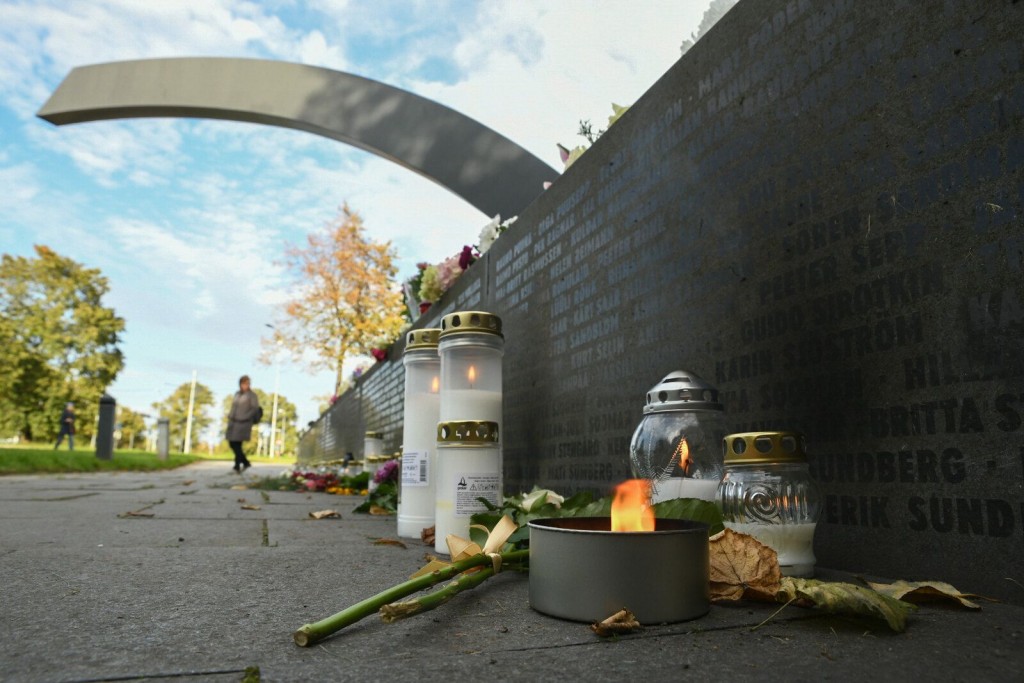
Of course, the public interest is understandable, but what happened to MV Estonia is still a highly sensitive subject to many people. We need to be responsible and respect both the memory of the victims and the ongoing grief of their loved ones. For these reasons, it is the goal of Estonian Safety Investigation Bureau (ESIB) to give a more clear answer to the following question: what was the cause of the holes in the starboard of the ship? The holes were seen in the Norwegian-made film captured in 2019 and shown to the general public a year later. The purpose of initiating the primary assessment of MV Estonia is to identify the hitherto unknown causes of the damage in the starboard and to assess the final report written by the Joint Accident Investigation Commission (JAIC) in 1997. The results of the work are planned to be published in the second half of next year.
The main goal of the preliminary marine research conducted this summer was to determine the general condition of the ship, to measure the deformation of the starboard, and to obtain an accurate overview of the geology, bathymetry and aquatic environment in the surrounding area of the wreck, using modern technology. We are able to obtain very precise information about the general condition of the shipwreck and the seabed surrounding it. This information is of critical importance in planning the main research and carrying out various simulations.
The main research is hoped to be conducted without interruption
In the preliminary research conducted in July, hitherto unknown damage was discovered. This damage requires more in-depth research in the next stage. Among other things, it was determined that the damage in the starboard side of the ship, which was shown in the Norwegian film made in 2020, is not the only hitherto unknown damage, but that there is also a number of cracks and deformations in the hull. We are planning to determine the causes of the recently discovered damage.
It is also necessary to identify why the bow ramp, which so far had been partially attached to the ship with two hinges, is missing. Further research is needed to establish these facts. We do not share any information based on assumptions in order to prevent the spread of misinformation in the media and among the public.
The Estonian Safety Investigation Bureau conducts the research professionally, involving leading specialists from Estonia, Sweden, Finland and other parts of the world, if necessary. For instance, Brian Abbott, who specialises in 3D scanning and has repeatedly examined the wreck of Titanic, took part in the preliminary research.
It is also a fact that the preliminary underwater investigations of the wreck of MV Estonia were interfered with. However, it is not the task of ESIB to find out who or what was the interferer and what was the cause of it. The information regarding the interference was passed on to the relevant authorities. We do hope that the cooperation between different countries will make it possible to avoid interference in the next stages of the research.
All materials will be published on our website
Material filmed during the nine-day preliminary research is scheduled to be published in full on the research-related website that will be created. Material collected during the preliminary research is documented in detail and the raw data files are saved in a format that reflects all the changes: the logs show the date and the start and the end time of each individual study.
The video and the sonar recordings will be reviewed in order to blur areas where potential bodies or personal items can be seen, but the recorded material will not be cut or edited. As a large amount of material was recorded during these 9 days, it will take time to get acquainted with the material and work through it.
The next most substantial stage of work is the digitisation of the figure drawings of the MV Estonia in order to perform various simulations. We are planning to create a simulation which shows how the locks and hinges of the bow visor broke and how the bow visor separated from the ship, until the ship sank below the water’s surface.
While the sinking of the MV Estonia has been reconstructed in various simulations, they have only reflected the sinking until the ship was below the water’s surface. Sinking into the seabed and subsequent landslides have not been previously simulated. The Estonian Safety Investigation Bureau is planning to simulate the part of the accident where the ship had already sunk below the water’s surface and is sinking to the seabed. We would like to show how the various collapses on the seabed took place over time, which deformations have occurred because of these and how these have occurred. This will explain which damages formed due to the sinking and which due to the subsequent landslides. In the future, this material will also be public.
If we want exhaustive and objective answers to what has caused the damage we must focus on the quality of the research. The Estonian Safety Investigation Bureau is not searching for culprits but trying to identify the causes of accidents in order to prevent similar incidents from happening.
This opinion piece by Rene Arikas was published in Eesti Päevaleht on the 3rd of September 2021